
AI and Health Misinformation
Using AI for health information: what to know
When you’re feeling unwell, Googling your symptoms may seem like the fastest way to get answers. But trusting AI-generated advice – from Google AI Overview or chatbots – can put you at risk.
What is Google AI Overview?
AI Overviews include massive amounts of Internet content. This content can be from peer-reviewed journals, news sites, blogs and even user-driven social media platforms like Reddit. AI treats every piece of information from these sources equally; it can’t distinguish fact from satire or detect dangerous content. Even when a Google overview cites credible sources like the Mayo Clinic, World Health Organization or Canadian Medical Association, AI simply mashes up its data and puts good information on equal footing with bad.
Can I trust AI for medical advice?
AI doesn’t “know” you. It can’t factor in your medical history, lifestyle or stress level. For example, if you want relief from a stomach ache, AI can’t tell if it’s from skipped meals, anxiety or something more serious. It simply matches patterns in text. Doctors, nurses and other licensed health professionals have years of training and real-world-experience. They can see the whole picture, ask the right questions and give medical advice tailored to you, not just your search terms.
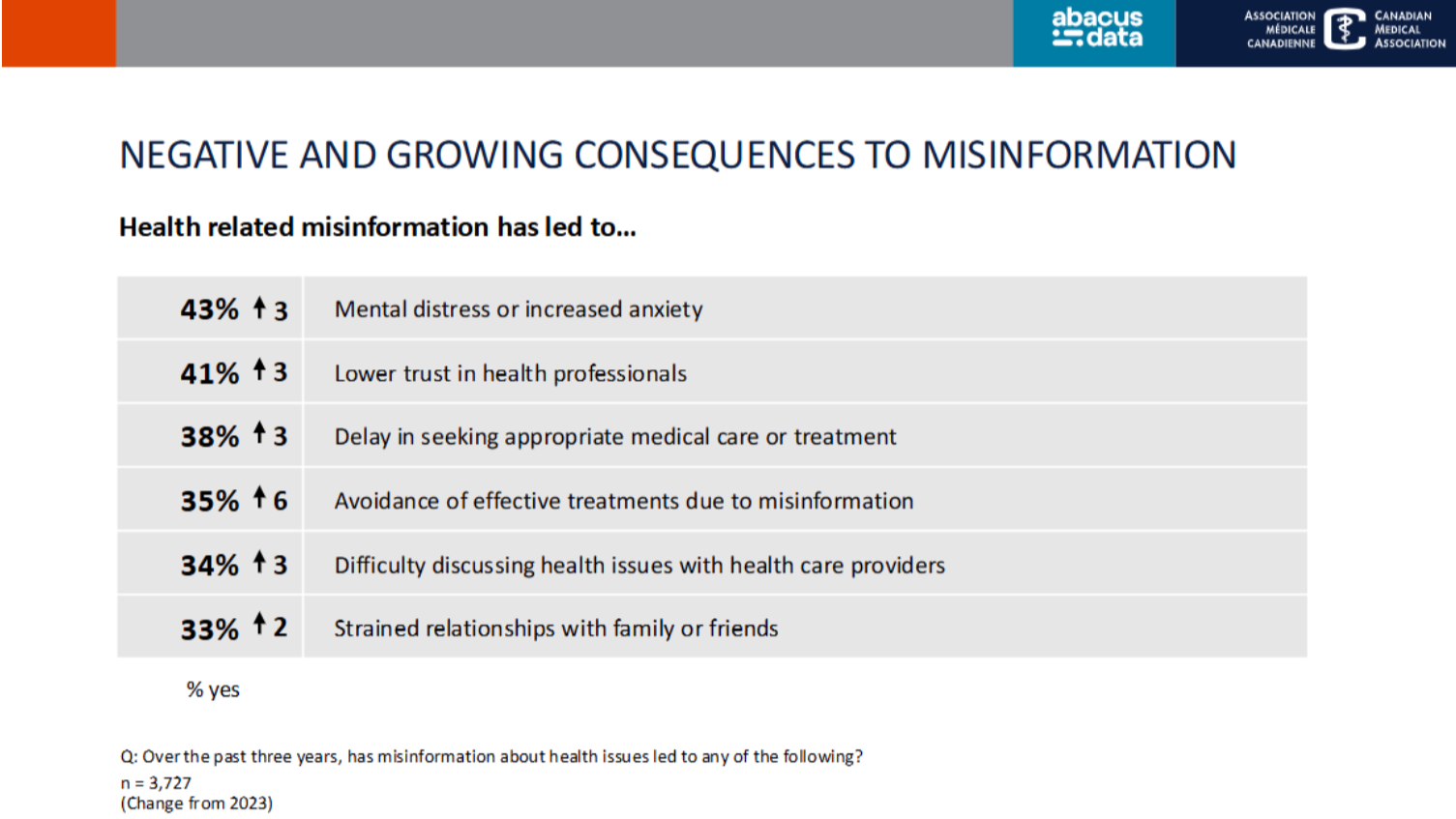
Medical misinformation causing Canadians harm: source Canadian Medical Association 2025 survey
Is AI medical advice potentially dangerous?
Some of the ways AI can mislead you and potentially provide harmful advice:
Algorithmic bias - in healthcare, underrepresentation of a patient group in data, for example Indigenous Canadians, can result in "unfair" AI algorithms. An unfair algorithm amplifies existing inequalities rather than providing objective, neutral outcomes.
Hallucinations - AI sometimes invents answers. There have been cases where Google’s AI “hallucinated” dangerous tips by lifting jokes from online forums.
Outdated or untraceable facts - You don’t often see a list of sources. AI summaries can repeat obsolete or disproven guidance as if it’s current and trustworthy.
What sources should I turn to for health information?
The first step should always be to speak with a health care professional who is trained to provide accurate and personalized health advice. If you want to learn more, use Google to find resources, not answers. Try adding “ -ai” to your search to filter out AI-generated content and focus on accredited, authoritative sources.